
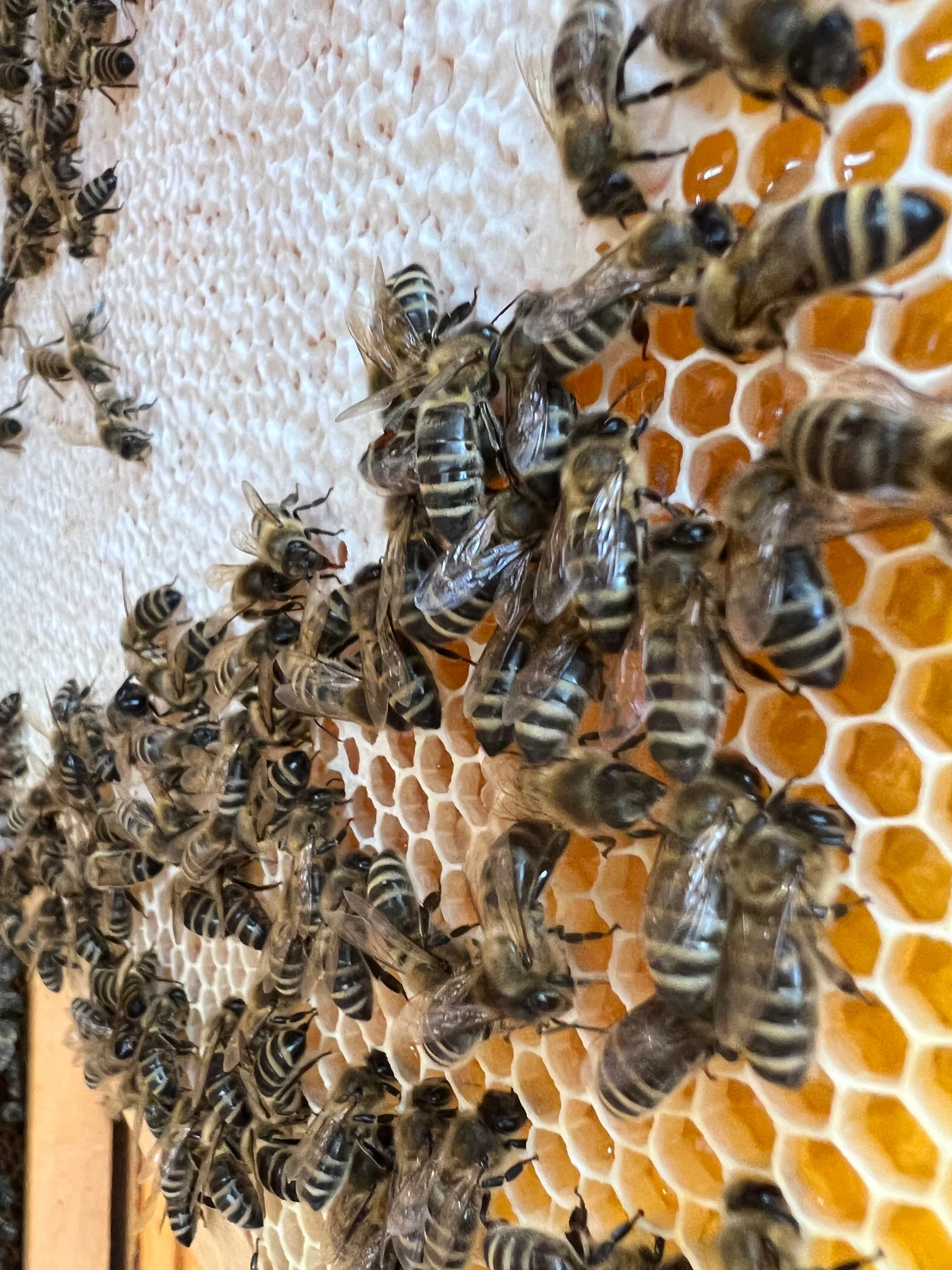
How honey is made
Bees bring the collected raw material into the hive and deposit it in the comb cells. There, they gradually transform it with substances they produce themselves and remove excess water until the honey is ripe.
Once the honey is ripe, bees usually seal the filled comb cells with wax cappings. This protects the honey from moisture in the surrounding air and helps maintain its ripe state.
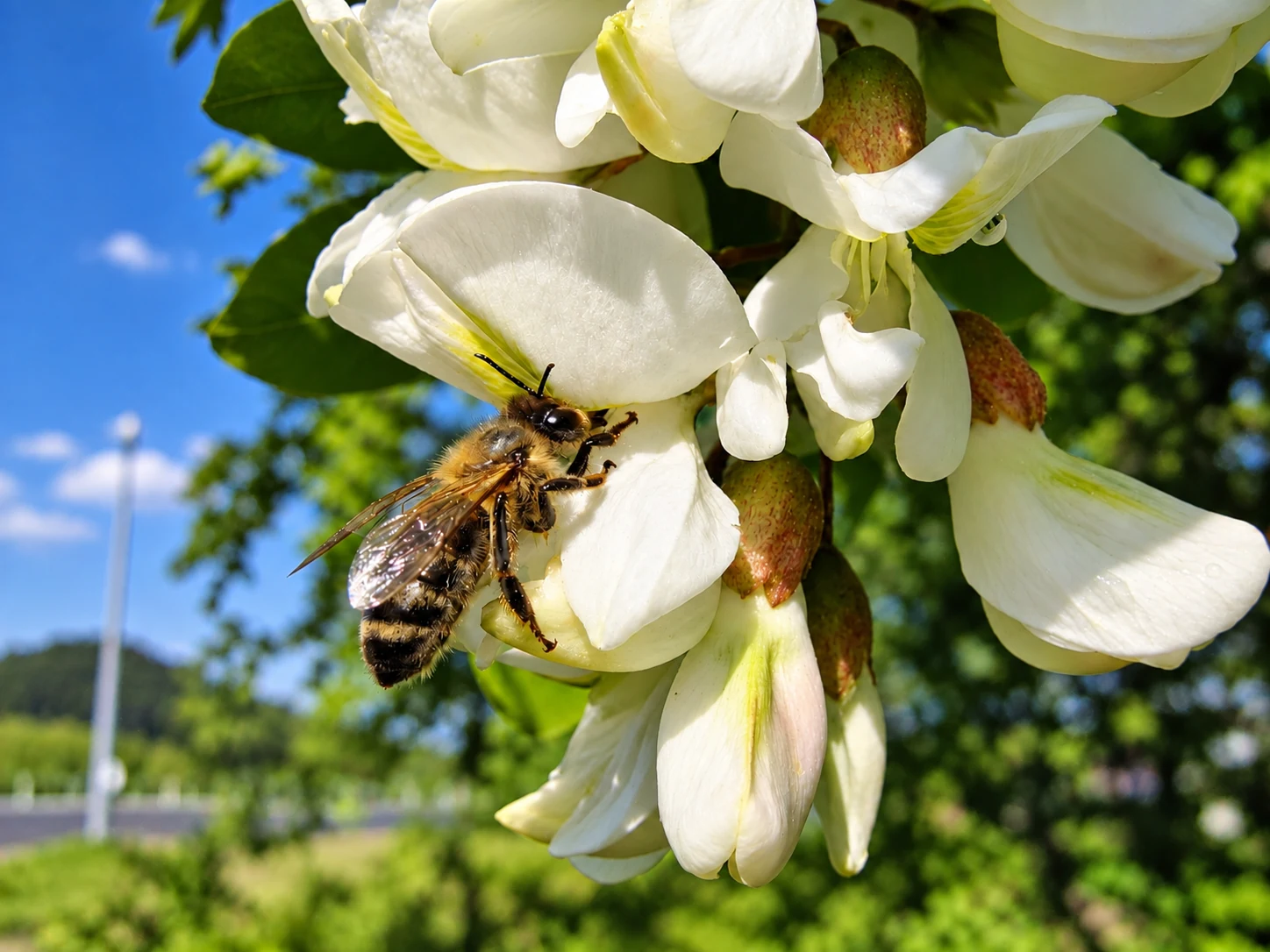
Nectar and honeydew
By origin, we mainly distinguish blossom or nectar honey from honeydew honey. Bees collect nectar from the flowers of nectar-producing plants. Honeydew is mainly associated with forest forage and is collected from living parts of plants.
Why are honeys so different?
The colour, aroma, flavour and other characteristics of honey are mainly linked to its botanical origin. Acacia honey can therefore be very light and mild, chestnut honey more pronounced and pleasantly bitter, while silver fir honey is dark and quite different in character.
Crystallisation is a natural process
Honey may crystallise over time. This is not a sign that anything is wrong with it, but a natural process. Some varieties crystallise faster, while others remain liquid much longer.
From comb to jar
When the honey is ready for extraction, I remove the honey-filled combs from the honey super. I brush the bees off the combs, remove the wax cappings and extract the honey using a honey extractor.
If you would like to see how I do this in practice, you can watch the process in Beekeeping work – Honey extraction.